Productivity trends in Singapore 2026 refer to the evolving technologies, workplace models, policies, and behavioural shifts shaping how organisations in Singapore improve efficiency, output, and long-term competitiveness. In 2026, productivity is no longer just about working harder or longer hours, it’s about working smarter, automating wisely, and building sustainable systems that support both people and profit.
Singapore has always positioned itself as a forward-looking economy. With continued government backing, digital transformation grants, and a highly skilled workforce, the country is entering a new productivity phase, one that blends artificial intelligence, flexible work, and human-centric management.
Let’s unpack what’s really happening on the ground.

Why Productivity Trends in Singapore 2026 Matter More Than Ever
Singapore’s economy is maturing. Wage pressures are rising, and global uncertainty hasn’t exactly disappeared. According to Singapore’s Smart Nation initiative, digital transformation and AI adoption remain national priorities, reinforcing the urgency for businesses to modernise operations.
Businesses are now measuring productivity using:
- Revenue per employee
- Automation rate
- Digital maturity index
- Employee engagement score
- AI utilisation ratio
The shift is clear: output matters more than hours.
The Most Powerful Productivity Trends in Singapore 2026
1. AI-Integrated Workflows (Beyond Chatbots)
Artificial intelligence in Singapore has matured. In 2026, we’re seeing:
- AI-powered operations dashboards
- Automated financial forecasting
- Predictive HR analytics
- Smart customer segmentation
- Generative AI for content, legal drafts, and coding
Instead of using AI as a standalone tool, businesses integrate it directly into CRM, ERP, and supply chain systems.
Example Case Study (SME Logistics Firm – 2025 Pilot Program)
A mid-sized logistics company in Jurong reduced operational processing time by 37% after implementing predictive routing software. Their ROI on digital investment was achieved within 11 months.
2. Hybrid Work 2.0: Structured Flexibility
Hybrid work remains central to productivity trends in Singapore 2026. But the approach is more disciplined now.
Organisations are implementing:
- Fixed collaboration days
- Clear documentation systems
- Outcome-based KPIs
- Meeting efficiency standards
- Asynchronous workflows
One overlooked factor affecting productivity? Meeting quality.
Many companies in Singapore are refining their internal processes after realising that unstructured meetings reduce efficiency. If you’re looking for a detailed breakdown, this guide on how to run effective meetings in 2026 outlines practical frameworks businesses are using to improve collaboration.
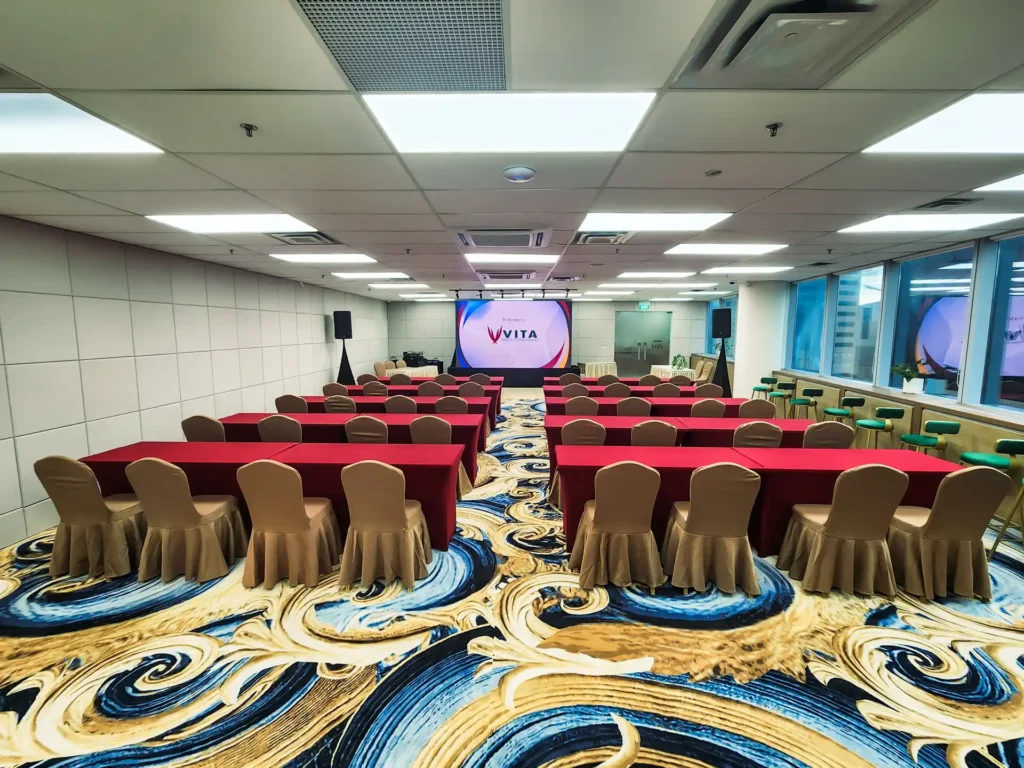
Interestingly, venue environment also influences productivity. More companies are choosing structured, distraction-free spaces for strategic discussions and leadership sessions. For example, the Alexander Room offers a professional setting designed for focused collaboration, a subtle but meaningful contributor to effective business execution.
Because sometimes productivity isn’t about more software. It’s about the right environment.
3. Digital Upskilling as Core Strategy
One consistent productivity trend in Singapore 2026 is workforce reskilling.
Government-backed initiatives like SkillsFuture continue to play a role, but companies now run internal academies.
Popular skill areas include:
- Data analytics
- Prompt engineering
- Automation management
- Cybersecurity fundamentals
- Digital compliance
Businesses that invest in digital literacy report higher operational speed and lower outsourcing costs.
4. SME Automation Goes Mainstream
Automation used to feel corporate. Not anymore.
In 2026, SMEs across Singapore are adopting:
- Automated invoicing
- Digital HR onboarding
- AI-powered chat support
- Inventory tracking systems
- Low-code workflow builders
Subscription pricing models make adoption easier. The barrier to entry is lower than it was five years ago.
Here’s a simplified impact comparison:
| Area | Before Automation | After Automation |
|---|---|---|
| Invoice Processing | 3–4 hours daily | 30 minutes |
| Customer Response Time | 12–24 hours | Instant AI reply |
| Inventory Errors | Manual miscounts | Real-time sync |
| Reporting | Weekly manual | Live dashboard |
These shifts directly reflect the evolving productivity trends in Singapore 2026.
5. Human-Centric Productivity
This might sound a bit soft, but it’s not.
Burnout became a real issue post-pandemic. In response, organisations are focusing on:
- Digital wellness policies
- Deep-work blocks
- Meeting reduction strategies
- Mental health days
The data suggests that productivity doesn’t increase with longer work hours. Instead, clarity and rest improve output.
Emerging Technologies Influencing Productivity Trends in Singapore 2026
AI + IoT in Smart Buildings
Singapore’s push for smart infrastructure means offices now use:
- Energy monitoring sensors
- Smart access systems
- Space utilisation analytics
This reduces cost and improves operational efficiency.
Data-Driven Decision Making
Companies are no longer relying on gut feeling. Instead:
- Real-time dashboards
- Automated reporting
- AI-based forecasting
This shortens decision cycles from weeks to days.
Practical Framework: How Businesses Can Adapt
If you’re wondering where to start, here’s a structured guide:
Step 1: Conduct a Productivity Audit
- Identify manual processes
- Measure revenue per employee
- Analyse workflow bottlenecks
Step 2: Prioritise Automation
- Start with finance and admin
- Move into operations
- Integrate AI last, not first
Step 3: Upskill Teams
- Introduce AI literacy workshops
- Encourage cross-functional learning
Step 4: Redesign KPIs
- Focus on outcomes
- Track efficiency gains
Challenges Businesses Still Face
Even with clear productivity trends in Singapore 2026, companies struggle with:
- Change resistance
- Poor implementation planning
- Overinvestment in tools without training
- Data security concerns
Technology is easy to buy. Implementation is harder.
Pro Tips for Staying Competitive in 2026
- Start small but think long term.
- Automate repetitive tasks before hiring more staff.
- Align leadership on measurable productivity metrics.
- Don’t chase every trend, focus on relevance.
- Invest in people just as much as systems.
Sometimes, less tech done properly beats more tech done poorly.

Conclusion: Turning Productivity Trends in Singapore 2026 Into Measurable Growth
The defining element of productivity trends in Singapore 2026 is alignment, between technology, people, systems, and environment.
Businesses that take a structured, long-term approach to productivity outperform competitors who adopt tools without strategy.
If your organisation is looking to enhance collaboration frameworks, host strategic planning sessions, or optimise team performance in a professional setting, explore how Vita Venue supports businesses across Singapore with structured spaces designed for focus, clarity, and productive engagement.
Whether it’s refining meeting processes, leveraging the right environment like the Alexander Room, or aligning your team with measurable performance goals, sustainable productivity starts with intentional action.
FAQs (Frequently Asked Questions)
What are the biggest productivity trends in Singapore 2026?
The biggest trends include AI integration, SME automation, structured hybrid work, digital upskilling, and data-driven management.
How is AI improving productivity in Singapore businesses?
AI reduces repetitive tasks, improves forecasting accuracy, and speeds up decision-making through predictive analytics.
Are SMEs in Singapore adopting automation in 2026?
Yes. SMEs increasingly use subscription-based automation tools for finance, HR, and customer support to stay competitive.
Does hybrid work reduce productivity?
Not necessarily. Structured hybrid models with clear KPIs actually improve output compared to unstructured remote setups.
What industries benefit most from productivity transformation?
Logistics, finance, retail, and professional services show the strongest measurable gains from digital transformation.