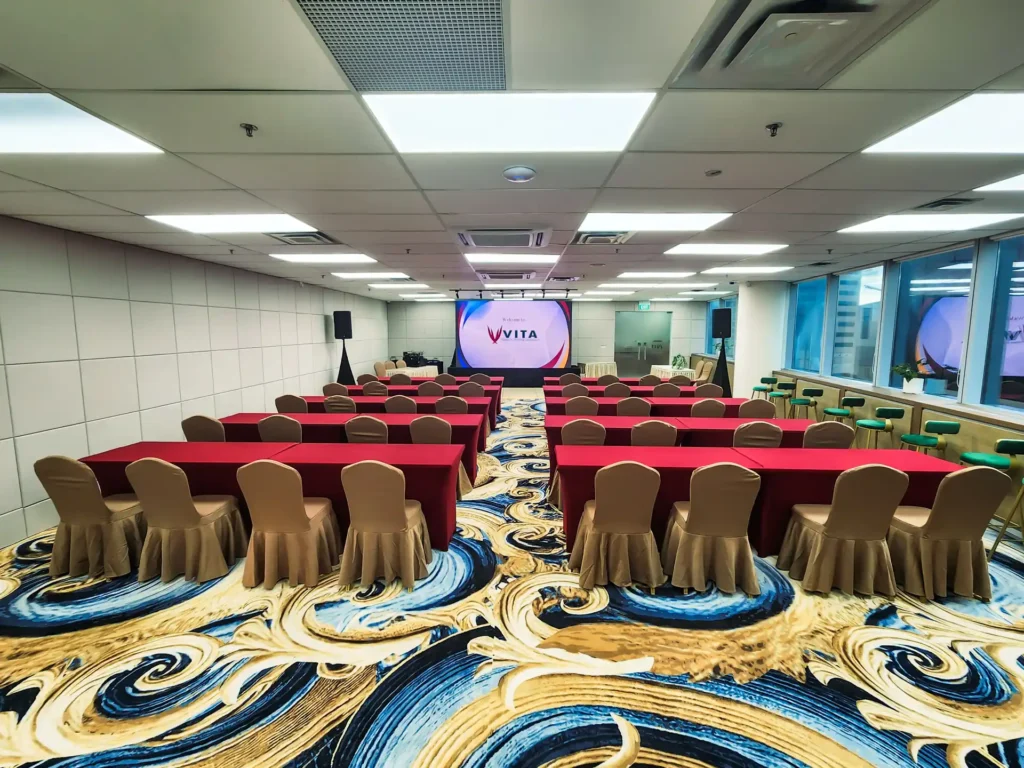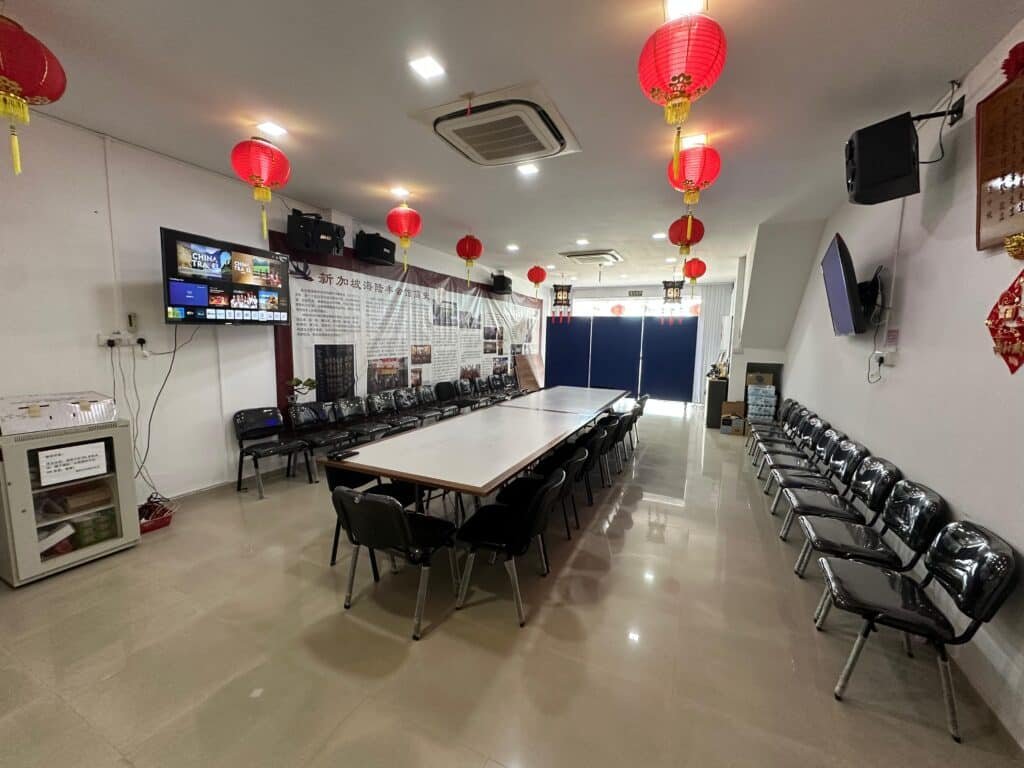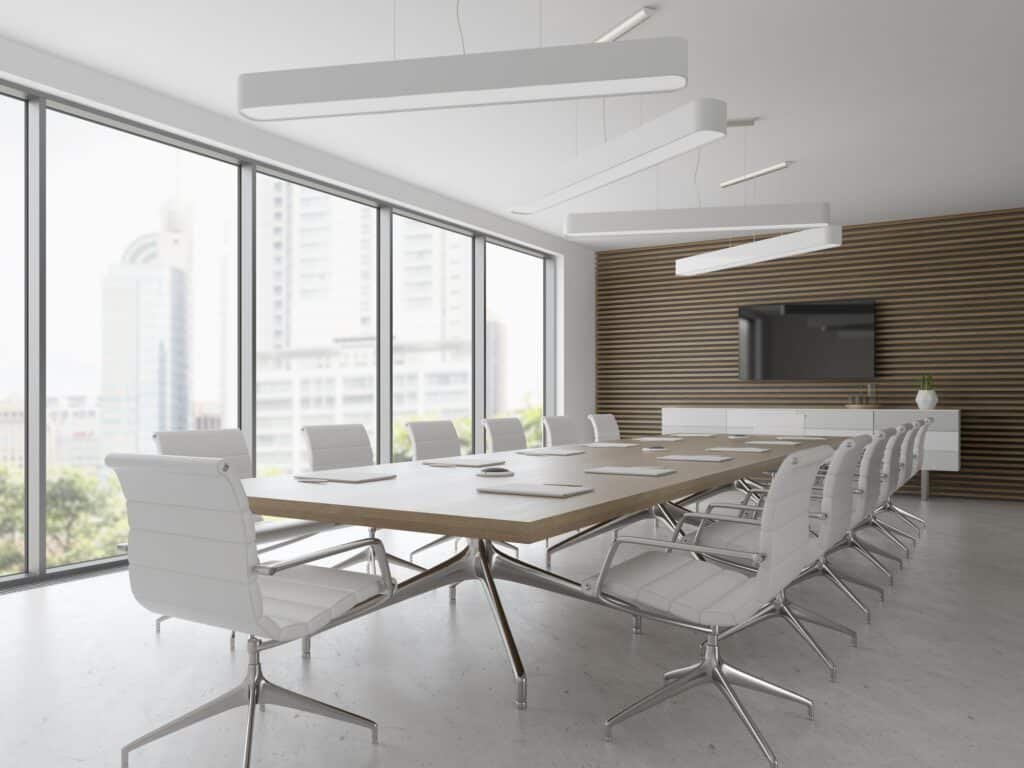
Sometimes when people talk about a hybrid event venue in Singapore, they picture something super high-tech, like a mini broadcasting studio hidden inside a hotel ballroom. Big screens, cables everywhere, a tech guy with a stressed face, the whole thing. And honestly… yeah, hybrid events can look a bit chaotic behind the scenes. But the idea behind them is actually very simple: it’s a venue where your in-person guests and your online participants can join the same event without feeling disconnected or left out.
Over the past few years, especially after countless webinars, town halls, and awkward Zoom sessions, companies finally realized hybrid events aren’t a “pandemic workaround” they’re a long-term format that helps teams reach more people, save costs, and run smoother events overall. But choosing the right hybrid-friendly venue? That’s where many corporate planners get stuck.
Below is a clear, detailed, and slightly imperfectly-human guide to understanding hybrid venues, what to look for, and where companies often stumble.
What Exactly Is a Hybrid Event Venue for Corporate?
A hybrid event venue for corporate is basically a physical space that’s built to host two audiences at the same time:
- People sitting in the room
- People joining from anywhere online
To make this work, the venue must provide:
- Stable internet (not the “shared hotel WiFi” kind)
- Proper audio capture so remote guests don’t hear echoes
- Good cameras or multi-camera setups
- Screens for both in-room and online interaction
- Technical support and backup equipment
At its best, a hybrid venue feels like everyone physical and virtual is part of the same conversation. At its worst… well, you know the drill: frozen screens, someone saying “can you hear me?”, delayed audio, and participants who leave 5 minutes after joining.
Why Corporate Teams Prefer Hybrid Event Venues Now
Even companies that swore they’d “go back to fully physical events” slowly realized that hybrid formats solve old problems. Here are the most common reasons:
1. More flexibility for attendees
Not everyone can commute into the city, especially across Singapore during peak hours. Hybrid makes events more reachable.
2. Higher attendance
Studies from multiple event platforms show 20–40% higher attendance when hybrid options exist.
3. Lower travel and logistics cost
Some teams fly regional staff into Singapore only for major events. Hybrid reduces unnecessary flights and accommodation.
4. Better content quality
If you record the online stream, your event suddenly becomes reusable content, training modules, onboarding videos, knowledge libraries.
5. Corporate compliance & accessibility
Hybrid is inclusive. It supports remote staff, parents, differently-abled attendees, or those with mobility constraints.
Key Features to Look For in a Corporate Hybrid Event Venue
Here’s a simple table summarizing what matters and why:
| Feature | Why It Matters | Quick Test |
|---|---|---|
| Dedicated high-speed internet | Streaming dies without it | Ask: “Is the connection dedicated or shared?” |
| Professional audio setup | Avoid echo, muffled voices | Do a mic test |
| Multi-camera support | Makes online attendees feel present | Ask for camera switching demo |
| On-site technician | Fix issues instantly | Ask if included or add-on |
| Lighting | Avoid dark or overly bright frames | Check for adjustable lighting |
| Room layout flexibility | Supports workshops, town halls, training | Ask for floorplan options |
A little narrative note
I’ve seen events where everything looked fancy big LED wall, expensive catering but the WiFi barely held up. People kept dropping from the Zoom call every time someone opened the door. So trust me, always test the internet, no matter how polished the space looks.
How to Plan a Smooth Hybrid Corporate Event (Step-by-Step)
Here’s a simple sequence to follow:
Step 1: Decide who your online audience is
Are they passive viewers? Active participants? Trainers? Execs?
Step 2: Choose the right hybrid-friendly venue
Make sure it already has AV infrastructure, not something you need to bring from scratch.
Step 3: Do a tech rehearsal
Always. Even a quick 20-minute test helps prevent disaster.
Step 4: Assign clear roles
- Host
- Moderator
- Tech operator
- Chat handler for remote attendees
Step 5: Prepare your content for dual audiences
Slides with readable text, pacing that includes online Q&A, and camera-friendly presentations.
Step 6: Run a post-event review
Hybrid events are great because you can analyze engagement data.
Case Study How One Company Improved Engagement by 63%
A mid-sized consulting firm in Singapore ran quarterly town halls. Before, attendance was around 70–80 on average. They switched to a hybrid venue with proper multi-camera setups and saw:
- 63% increase in total engagement
- Online attendance doubled
- In-room participation stayed stable
- Senior execs could join remotely while traveling
The main difference?
The venue they used had a dedicated fiber line and an on-site AV team that monitored the stream live. That alone avoided the usual chaos.
Most Common Mistakes Corporate Teams Make (And How to Avoid Them)
1. Assuming WiFi is “good enough”
Shared WiFi = dropped connections. Always check for dedicated bandwidth.
2. Bringing too little tech support
Corporate teams often think they only need 1 tech person. No you need at least two for hybrid events: one for the room, one for the stream.
3. Overloading the schedule
Virtual attendees fatigue faster. Hybrid events need breaks.
4. Ignoring audio setup
Bad audio kills engagement faster than anything else.
5. Not planning engagement moments
Polls, questions, breakout rooms, chat check-ins, all help remote people feel included.
Conclusion, Choose a Hybrid Event Venue That Supports the Way You Work
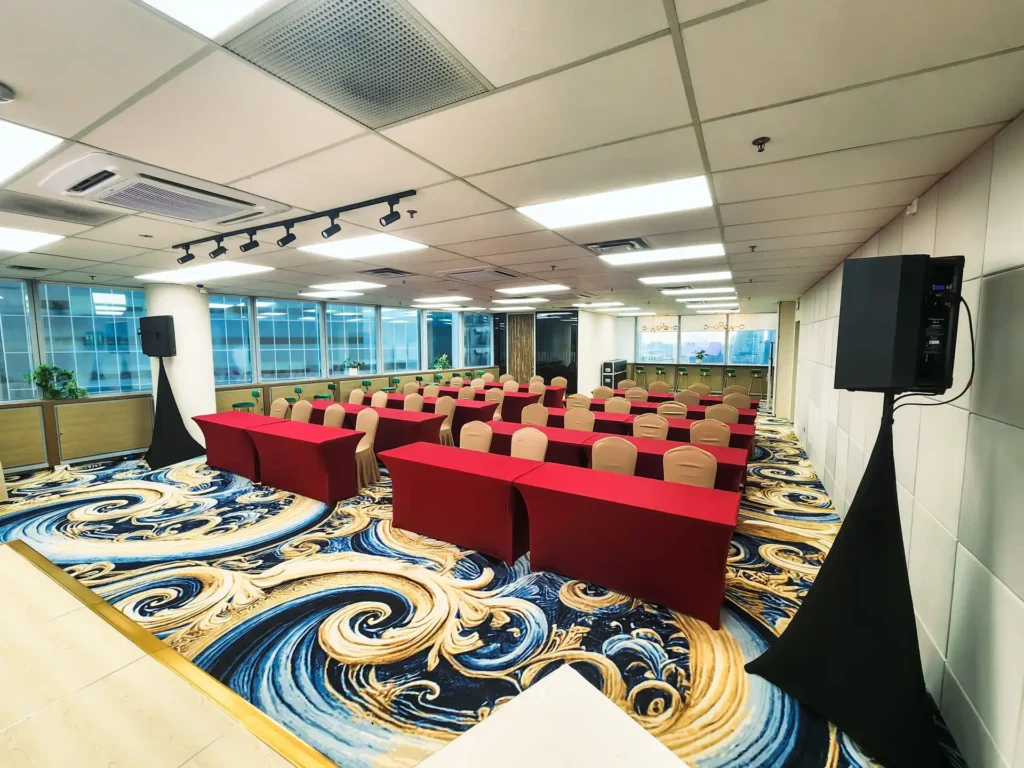
Choosing the right hybrid event venue for corporate isn’t just about renting a nice room. It’s about making sure your onsite and online guests feel equally included, with technology that works quietly in the background instead of becoming the problem. Venues like Vita Venue already offer hybrid-ready setups, dedicated bandwidth, flexible layouts, and even event hall half day options for shorter sessions.
FAQs (Frequently Asked Questions)
What makes a venue truly hybrid-ready?
Strong internet, cameras, audio, screens, and on-site technicians.
Are hybrid events more expensive?
Sometimes, due to AV costs, but they save money on travel and accommodation.
Can a small room be a hybrid venue?
Yes. Even a small meeting room or boardroom works if the equipment is right.
How early should we book a hybrid venue?
Around 4–8 weeks in advance works for most corporate teams.
Do we need special microphones?
Yes lapel, boundary, or directional mics deliver much clearer sound.