Team alignment meeting ideas refer to structured strategies, activities, and meeting formats designed to ensure that team members share the same goals, priorities, expectations, and performance standards. These meetings help clarify direction, eliminate silos, and create accountability across departments.
In today’s fast-paced business environment, misalignment often leads to duplicated work, unclear responsibilities, and slower decision-making. Well-planned team alignment meeting ideas solve this by creating a shared understanding of objectives, timelines, and measurable outcomes.
At Vita Venue, structured corporate spaces are designed to support strategic discussions, executive workshops, and alignment sessions that help organisations operate more cohesively.
Why Team Alignment Meetings Matter More Than Ever
Modern organisations operate across hybrid teams, multiple departments, and fast-changing objectives. Without regular alignment:
- KPIs become inconsistent
- Departments prioritise different outcomes
- Communication gaps increase
- Accountability weakens
Research published by Harvard Business Review highlights that organisations with strong internal alignment outperform competitors in execution speed and profitability.
Effective team alignment meeting ideas provide:
- Shared clarity
- Transparent goal tracking
- Defined ownership
- Stronger collaboration
Pro tips: Before planning any team alignment meeting ideas, define one clear primary objective. Alignment meetings become ineffective when they attempt to solve too many unrelated issues at once.
7 Practical Team Alignment Meeting Ideas That Actually Work
Strong alignment does not happen by accident, it requires intentional structure, clear facilitation, and the right discussion format. The following Team alignment meeting ideas are designed to improve clarity, accountability, and cross-functional coordination in a practical and measurable way.
1. Quarterly Goal Reset Session
Purpose: Re-evaluate objectives and adjust direction.
Structure:
- Review previous KPIs
- Identify blockers
- Adjust quarterly targets
- Confirm accountability
This format creates a disciplined checkpoint rather than waiting until year-end reviews. By revisiting measurable indicators and openly discussing constraints, teams can recalibrate priorities before small inefficiencies become systemic issues. Among practical Team alignment meeting ideas, this approach works particularly well for leadership groups that require both strategic overview and operational clarity.
Best for leadership and department heads.
2. Cross-Department Alignment Workshop
Purpose: Reduce silos and clarify inter-team dependencies.
Activity Format:
| Step | Activity | Outcome |
|---|---|---|
| 1 | Team presentations | Visibility of goals |
| 2 | Dependency mapping | Clear collaboration points |
| 3 | Risk identification | Anticipated bottlenecks |
| 4 | Alignment agreement | Shared roadmap |
This workshop-style format encourages transparency between departments that may otherwise operate independently. When teams publicly outline their priorities and challenges, hidden interdependencies become visible. As a result, collaboration becomes proactive rather than reactive.
3. “Start, Stop, Continue” Strategy Roundtable
Participants answer three structured questions:
- What should we start doing?
- What should we stop doing?
- What should we continue doing?
The simplicity of this format makes it powerful. It removes unnecessary complexity and encourages honest reflection. Because responses are concise and action-oriented, leadership can quickly identify recurring themes and improvement opportunities. This is one of the most efficient Team alignment meeting ideas for teams that need rapid insight without extended workshops.
4. KPI Dashboard Alignment Session
Display performance dashboards and discuss:
- Gaps vs targets
- Resource needs
- Performance improvements
By anchoring discussion around real data, emotional bias is reduced and conversations remain objective. Visual dashboards allow teams to interpret trends collectively, making alignment grounded in measurable outcomes rather than assumptions.
This format works well in a professional environment with reliable AV systems. To understand how structured review sessions can be organised effectively, many organisations explore guidance similar to the framework discussed in How to Plan a Professional Corporate Review Session, particularly when alignment intersects with performance evaluation.
5. Leadership Vision Recalibration Meeting
Purpose: Ensure executive vision matches operational execution.
Unlike typical reporting sessions, this meeting format begins with senior leaders articulating the company’s current strategic direction in clear, outcome-driven terms. Rather than moving immediately into metrics, the session first establishes intent, why specific priorities matter and what long-term positioning the organisation seeks to achieve.
Once the executive vision is clarified, department representatives respond with a grounded operational perspective. They outline current realities, resource limitations, and frontline feedback that may not be visible at the strategic level. This creates a constructive contrast between aspiration and execution.
From there, the discussion naturally shifts toward identifying alignment gaps, areas where expectations and operational capability diverge. These gaps are analysed collaboratively, not defensively, with the objective of refining strategy or reallocating resources where necessary.
The meeting concludes with strategic adjustments and a clear communication plan. Leaders confirm what will be recalibrated, what remains unchanged, and how the refined direction will be communicated across the organisation. Among advanced Team alignment meeting ideas, this format is particularly effective when companies are navigating growth, restructuring, or market shifts.
6. Scenario-Based Alignment Discussion
Teams review hypothetical challenges such as:
- Budget reduction scenario
- Sudden demand increase
- Operational disruption
This method strengthens coordination under uncertainty. By simulating pressure scenarios, teams identify vulnerabilities and improve proactive collaboration before real challenges arise.
7. Annual Strategy Alignment Forum
Ideal for larger teams (30–60 participants), this format combines plenary discussions with breakout sessions and a final strategic summary. It allows leadership to present overarching direction while empowering teams to contribute tactical insights.
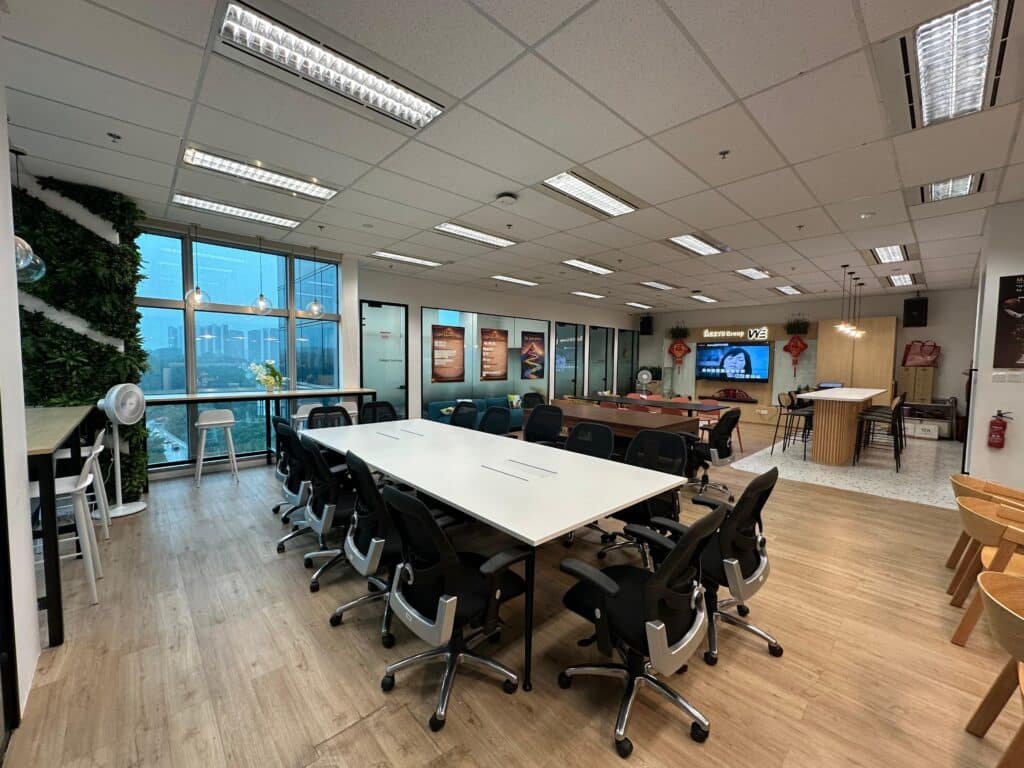
For such structured sessions, venue configuration plays an important role. You can explore how executive-scale rooms are structured for collaboration on the Nexus Room meeting space page, which illustrates how flexible seating supports interactive workshops and strategic discussions.
Pro tips: Choose a room layout that matches your alignment format. U-shape works well for collaborative discussion, while cluster seating supports breakout activities.
Choosing the Right Environment for Team Alignment Meeting Ideas
The success of team alignment meeting ideas depends not only on content but also on environment.
A professional meeting venue should offer:
- Quiet, distraction-free surroundings
- Presentation-ready infrastructure
- Flexible seating
- Accessibility for all participants
To explore how corporate meeting environments are structured to support alignment sessions, you may review the available configurations at Vita Venue Singapore, where spaces are designed for executive discussions and collaborative workshops.
Alignment Meeting Framework Template
Even the most well-designed Team alignment meeting ideas can lose impact without a clear structure. A structured framework ensures discussions remain focused, outcomes are documented, and accountability is established before participants leave the room. Rather than allowing conversations to drift, this template creates a disciplined flow from intention to execution.
Opening objective clarification (10 mins)
The session should begin with a concise explanation of the meeting’s purpose. This aligns expectations immediately and prevents discussions from expanding beyond scope. Clear objectives help participants filter their input according to relevance.
Department performance summary (30 mins)
Each department presents key updates, focusing on measurable indicators rather than general commentary. This ensures visibility across teams and builds a shared understanding of current realities before deeper alignment begins.
Alignment gap discussion (45 mins)
This is the core of the meeting. Participants identify discrepancies between strategic goals and operational outcomes. Open dialogue is encouraged, but it should remain solution-oriented. Among structured Team alignment meeting ideas, this stage is where clarity and accountability are most strongly established.
Action plan mapping (30 mins)
Once gaps are identified, the discussion transitions into concrete next steps. Tasks are prioritised, timelines are defined, and success indicators are agreed upon. This step transforms conversation into execution.
Role assignment confirmation (15 mins)
Clear ownership prevents ambiguity. Each action item must be assigned to a responsible individual or team, ensuring follow-through beyond the meeting room.
Closing summary & documentation (10 mins)
The session concludes with a recap of decisions and commitments. Proper documentation ensures alignment remains visible and measurable after the meeting ends.
Common Mistakes When Planning Team Alignment Meeting Ideas
Even with a strong framework, certain missteps can reduce effectiveness:
- No clear objective
- Overcrowded agenda
- Lack of documented outcomes
- Inadequate AV setup
- Poor time management
Without a defined objective, meetings can become broad discussions without actionable conclusions. An overcrowded agenda may dilute focus, while failing to document decisions leads to repeated conversations in future sessions. Technical limitations, such as unreliable audio-visual systems, can also interrupt data-driven discussions.
Alignment meetings require structure to produce measurable results. When properly planned, they accelerate decision-making and strengthen cross-team coordination rather than simply consuming time.
Pro tips: Assign a neutral facilitator to manage time and ensure all voices are heard. This prevents dominance by senior participants and encourages balanced contribution.
Conclusion: Implementing Effective Team Alignment Meeting Ideas
Strong organisations thrive on clarity, communication, and coordinated execution. Well-structured team alignment meeting ideas ensure that every department understands priorities, responsibilities, and performance expectations.
A successful alignment session requires:
- Clear objectives
- Structured agenda
- Professional environment
- Reliable presentation setup
- Documented outcomes
If your organisation is planning an upcoming strategy workshop or alignment session, you can explore professionally structured corporate spaces at Vita Venue Singapore, where meeting environments are designed to support collaboration, clarity, and executive productivity.
By combining the right team alignment meeting ideas with a purpose-built meeting environment, businesses create the conditions necessary for stronger teamwork, faster decisions, and sustainable growth.
FAQs (Frequently Asked Questions)
How often should team alignment meetings be held?
Team alignment meetings should ideally be conducted on a quarterly basis for strategic alignment, complemented by monthly check-ins to review progress, address challenges, and adjust priorities. Quarterly sessions allow teams to realign goals with organizational strategy, while monthly updates help maintain momentum, ensure accountability, and prevent misalignment from escalating.
What is the ideal group size?
The ideal group size for team alignment meetings is typically between 15 and 30 participants, as this range allows for focused discussions, active participation, and effective decision-making. Larger groups can still be accommodated but may require breakout sessions or smaller discussion groups to ensure engagement, meaningful dialogue, and productive outcomes.
Should alignment meetings include senior leadership?
Yes, senior leadership should be involved in team alignment meetings because their participation reinforces strategic direction, accountability, and organizational priorities. Leadership presence also provides clarity on company vision, empowers teams to make aligned decisions, and demonstrates commitment to collaboration and performance alignment across departments.
How long should alignment sessions last?
Alignment sessions are most effective when conducted as half-day meetings, as this duration allows sufficient time for deep discussions, strategic planning, and collaborative problem-solving without causing participant fatigue. A half-day format also balances productivity with attention span, enabling teams to stay engaged while covering key alignment topics thoroughly.
What is the most effective alignment activity?
One of the most effective alignment activities is reviewing a KPI dashboard combined with structured, facilitated discussions, as this approach provides data-driven insights and ensures everyone understands performance metrics and strategic priorities. This activity encourages transparency, aligns expectations, and helps teams identify gaps, opportunities, and action plans with measurable clarity.