Overview: What Is an Essential Checklist Before Booking an Event Venue?
An Essential Checklist Before Booking an Event Venue is a practical way to make sure you don’t miss the important details when choosing a place for your event. Whether it’s a corporate meeting, a workshop, a networking night, or even a private celebration, the venue often decides how smooth (or stressful) everything turns out.
Many people jump straight to photos and pricing. That’s normal. But after handling dozens of events, one thing becomes clear: small overlooked details can turn into big problems on the actual day. Things like room flow, sound quality, or even how guests enter the space. This checklist is meant to slow things down just enough, so you can book with confidence and fewer regrets later.
Why the Venue Choice Matters More Than People Think
A venue is not just a room with walls. It quietly controls:
- How people move
- How long they stay
- How comfortable they feel
- How professional your event looks
According to industry surveys by event planning platforms, over 70% of event issues are venue-related, mostly layout, equipment, or access problems. Not the speakers. Not the food. The space itself.
That’s why using an essential checklist before booking an event venue saves more than money. It saves energy, time, and sometimes reputation.
Step-by-Step Essential Checklist Before Booking an Event Venue
1. Define the Purpose of Your Event (Clearly)
Before you even look at venues, pause for a moment and ask:
- Is this a formal or casual event?
- Are people expected to sit, stand, or move around?
- Is networking the main goal, or focus and attention?
For example:
- A board meeting needs quiet, privacy, and good acoustics
- A networking evening needs open space and flexible seating
- A product launch needs lighting, AV support, and visual impact
If you’re planning something more personal in a corporate setting, you may find inspiration from these top ideas for corporate farewell events, which also highlight how venue layout affects the overall mood.
Many venues also tailor their Meeting Package based on event type, so clarity here helps later.
2. Location: Easy to Find, Easy to Reach
Location is not just about prestige. It’s about convenience.
Things to check:
- Walking distance to MRT or public transport
- Parking availability nearby
- Clear building signage and entrance flow
A central business district location, for example, works well for weekday corporate events because attendees can come straight after work. That’s one reason many companies prefer venues around Raffles Place or similar areas.
3. Capacity vs Comfort (Not the Same Thing)
Every venue lists a maximum capacity. But maximum doesn’t mean comfortable.
| Setup Type | Comfortable Capacity | Common Mistake |
|---|---|---|
| Theatre style | 80–90% of max | Too tight aisles |
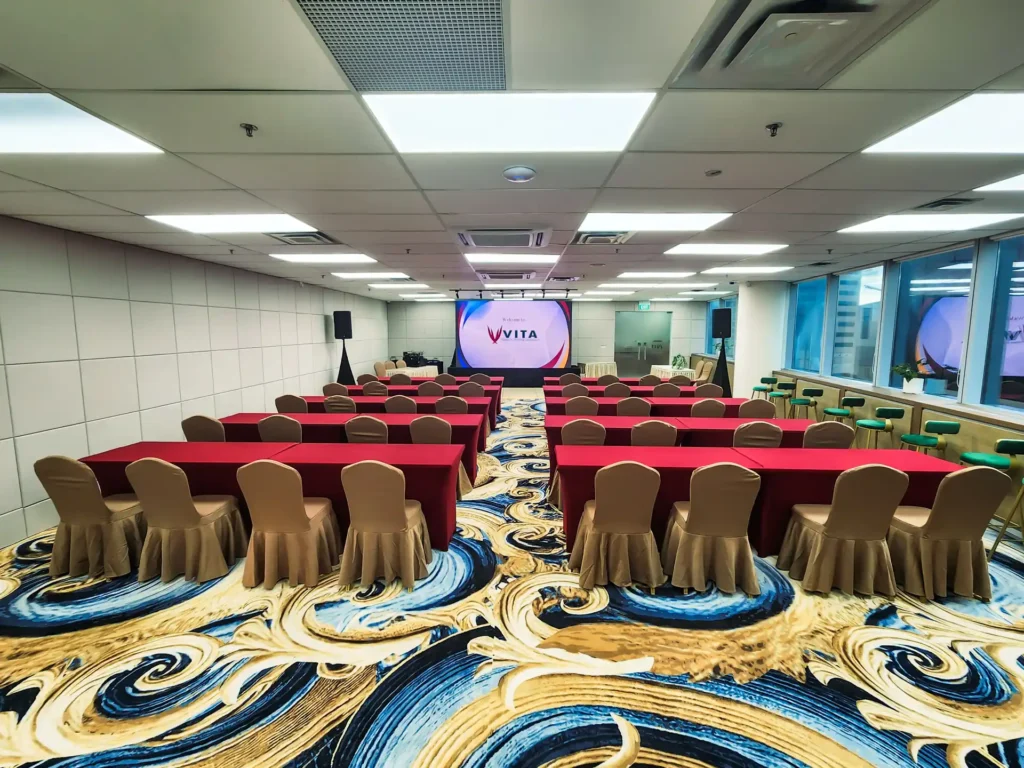
| Classroom | 60–70% of max | No table space |
| Networking | 50–60% of max | Crowd congestion |
Pro tip: Always ask for real event photos, not just empty room shots. Empty rooms lie a little.
4. Layout Flexibility and Room Flow
This is where an essential checklist before booking an event venue really matters.
Check if the venue allows:
- Re-arranging tables and chairs
- Breakout areas for small discussions
- Separate zones for food, talks, and mingling
Some venues look big, but once furniture is placed, movement becomes awkward. That affects energy, especially for longer events.
5. Technology and AV Support
No matter how good your content is, bad tech kills attention.
Basic AV checklist:
- Projector or LED screen
- HDMI / wireless connection
- Sound system that fits room size
- At least 2 microphones for Q&A
- Stable high-speed Wi-Fi
Ask if on-site technical support is included. This one detail alone has saved many events from last-minute panic.
6. Lighting, Acoustics, and Comfort
These are the quiet factors people remember without realizing why.
- Natural light helps daytime focus
- Warm lighting works better for evening sessions
- Poor acoustics cause fatigue after 30 minutes
Comfort also includes:
- Air-conditioning control
- Clean restrooms close to the room
- Noise insulation from other events
7. Pricing Transparency and Hidden Costs
This is where budgets usually slip.
Ask clearly about:
- Overtime charges
- Setup and teardown fees
- Cleaning fees
- External vendor penalties
A transparent venue will explain pricing calmly, not rush through it.
8. Catering and Food Policies
Food affects mood. Always.
Check:
- In-house catering options
- External catering rules
- Dietary flexibility (halal, vegetarian, allergies)
Some venues allow light refreshments easily but restrict full meals. That matters depending on event length.
9. Staff Support and On-Site Experience
A venue is only as good as the people running it.
Notice during inquiry:
- Response speed
- Clarity of answers
- Willingness to suggest solutions
Experienced venue teams often point out issues you haven’t thought about yet. That’s usually a good sign.
Real-World Insight: A Small Case Example
A mid-sized company hosted a weekday evening seminar for 60 people. The venue was stylish but lacked proper sound insulation. A fitness class next door disrupted the session.
Lesson learned? Always ask:
“What’s happening around us during our booking time?”
That one question would’ve avoided the issue entirely.
Quick Reference: Essential Venue Checklist Table
| Category | Must-Check Item |
|---|---|
| Purpose | Event type & audience |
| Location | Transport & access |
| Space | Layout flexibility |
| Tech | AV & Wi-Fi |
| Comfort | Lighting & acoustics |
| Cost | Transparent pricing |
| Support | On-site staff |
Pro Tips Before You Decide
- Visit the venue at the same time of day as your event
- Ask for a test run of equipment
- Walk the guest journey: entrance → room → restroom → exit
- Trust your discomfort. If something feels off, it probably is
These small habits come from experience, not theory.
Conclusion: Booking the Right Venue Starts with the Right Checklist
An Essential Checklist Before Booking an Event Venue isn’t about being overly cautious. It’s about respecting your time, your guests, and your goals. The best events don’t happen by accident. They happen because someone took the time to ask the right questions early.
If you’re looking for a venue that understands corporate flow, flexible layouts, weekday evening sessions, and professional support in Singapore’s central business district, you can explore how Vita Venue approaches event spaces with practicality and experience in mind.
FAQs (Frequently Asked Questions)
How early should I book an event venue?
Ideally 4–8 weeks in advance. Popular locations get booked fast, especially for weekday evenings.
Is a central location always better?
Not always, but for corporate and networking events, central areas usually improve attendance.
Should I choose a venue before finalizing guest count?
It’s better to estimate first. Booking too small limits flexibility, too large affects atmosphere.
Do venues usually include AV equipment?
Some do, some don’t. Always confirm what’s included and what costs extra.
What’s the most overlooked detail?
Room acoustics. People rarely test it, but they feel it during the event.